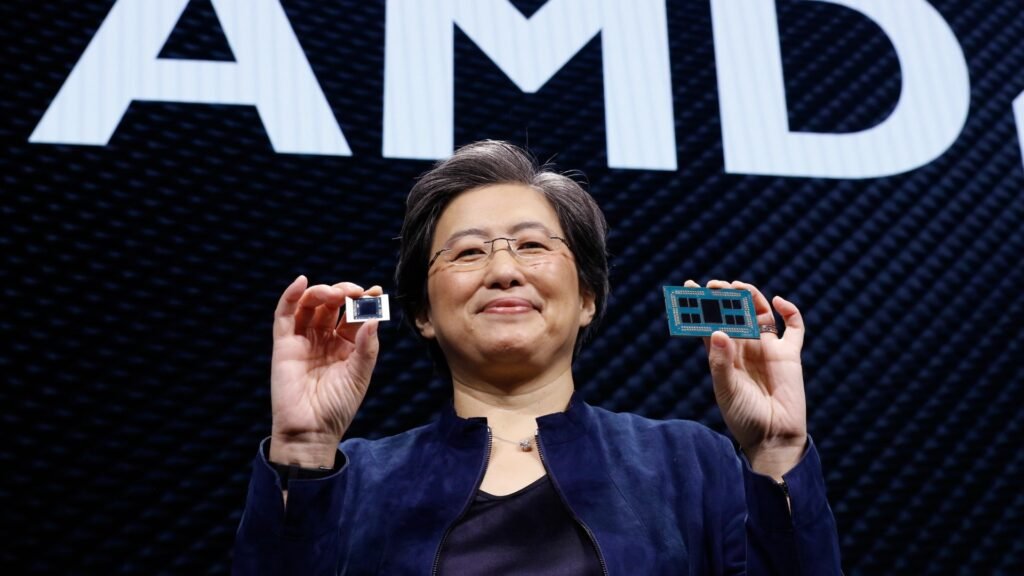
AMD, Yeni GPU Tasarımlarında Yapay Zeka Teknolojisini Kullanıyor

AMD is transitioning to a unified architecture for both data center and end-user products. This strategy includes its Radeon GPUs in the PC and console markets.
Impact of AI on GPU Design
In her statement, Lisa Su remarked, “We are considering how AI will design future chips, and AI will indeed help design some of them. However, creativity is still required to integrate all these elements, and I believe humans will remain central in this process.” According to Su, AI serves as a complementary tool, while human engineers maintain control over the process.
It has been confirmed that AMD employs AI in its GPU design process. However, AI’s contribution is not about independently designing the entire GPU but rather focused on accelerating complex calculations and producing more reliable outcomes. Nvidia is also known to benefit from AI-assisted design processes. By adopting this approach, AMD aims to catch up with the competition and significantly shorten design cycles.
Dr. Su emphasized that AI is revolutionizing not only hardware but also science, medicine, and manufacturing. She stated, “With AI, you can improve science, medicine, and production,” and mentioned that AMD aims to use AI to address the world’s biggest challenges in the long term. While details remain unclear, it is anticipated that this approach will influence AMD’s eagerly awaited next-gen GPUs based on the RDNA 5 architecture.